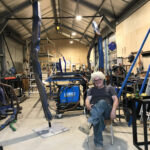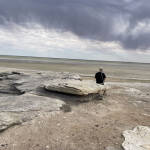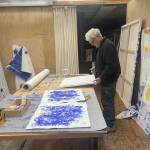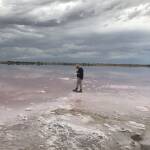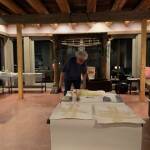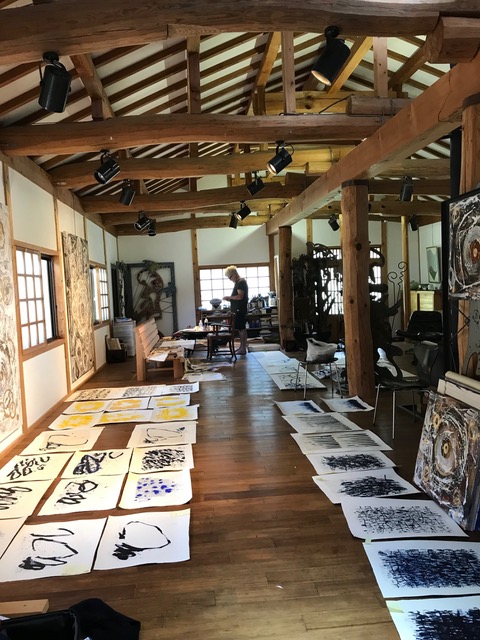
I was lucky enough to have the use of a quiet, rural studio just outside of Nara to work on the foundational paintings for my 2020 exhibition, 101 Views of the Anthropocene. The space belonged to Kuniko and Kazu, arriving as an absolute sanctuary of isolation right when I needed it most. I traveled down to the mountains of Nara directly after visiting Hiroshima and Nagasaki, where I had been conducting intensive visual research into the architectural scars and heavy historical weight left behind by the atomic bomb. Moving from the stark, sobering gravity of those memorial landscapes into the ancient, silent canopy of the Yoshino forests allowed the intense emotional weight of that research to finally settle, fracturing open into the raw, expressive brushstrokes that defined the series.
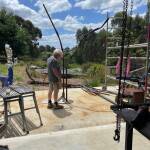
The studio itself sits dramatically above the rushing currents of the Takami River (Takami-Gama), suspended over a landscape that feels both timeless and deeply alive. In the documentary photographs, you can see Kazu’s own massive “work-in-progress” resting directly by the riverbank, with the main studio building visible as the first long, low-slung structure emerging from the tree line. The entire region acts as a living gallery; the physical terrain is shaped by an intersection of natural forces and centuries of human touch, creating a profound dialogue between the wilderness and the community that cares for it.
What struck me most during my residency was how the intricate patterns of the natural landscape were mirrored completely by the daily, utilitarian habits of the locals. In this pocket of Japan, human survival and high art dissolve into the exact same language—a meticulously stacked woodpile by a farmhouse door becomes just as compositionally compelling and aesthetically significant as the structural geometry of a traditional timber building. Every texture, from the grain of the split logs to the gray mist rising off the Takami River, found its way onto the canvases, anchoring the global crisis of the Anthropocene into the quiet, local rhythms of the Nara hills.